FAQ & Hiking Tips
Find answers to common questions and essential tips for hiking in Korea.
Booking & Reservations
Reservation status is updated in real time on the booking calendar. A departure is confirmed once enough participants sign up for the same date and route. In most cases, the first group to reach approximately six participants will be confirmed.
Once a departure is confirmed, the status will be updated on the booking calendar and the date will be closed to new reservations. You may join the waitlist, and additional spots may become available in case of cancellations. Please cancel in advance if your plans change.
For the Seoraksan Dinosaur Ridge trek, the departure is confirmed once four participants sign up due to shelter booking limitations. For the Hidden Wall – Beginner Rock Climbing Experience, the departure is confirmed once two participants sign up (maximum of three participants from the same group) to ensure more personalized attention and guidance.
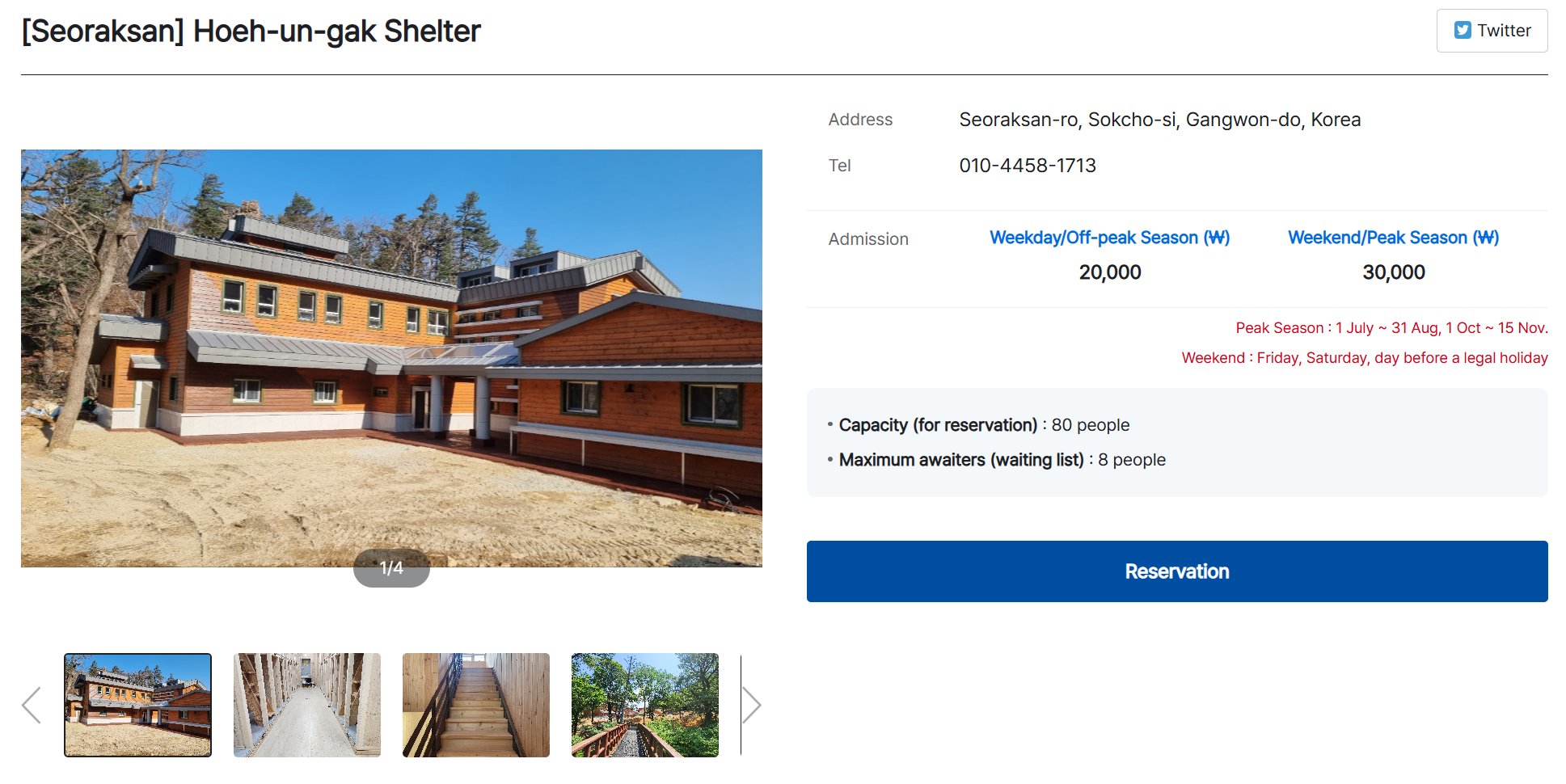
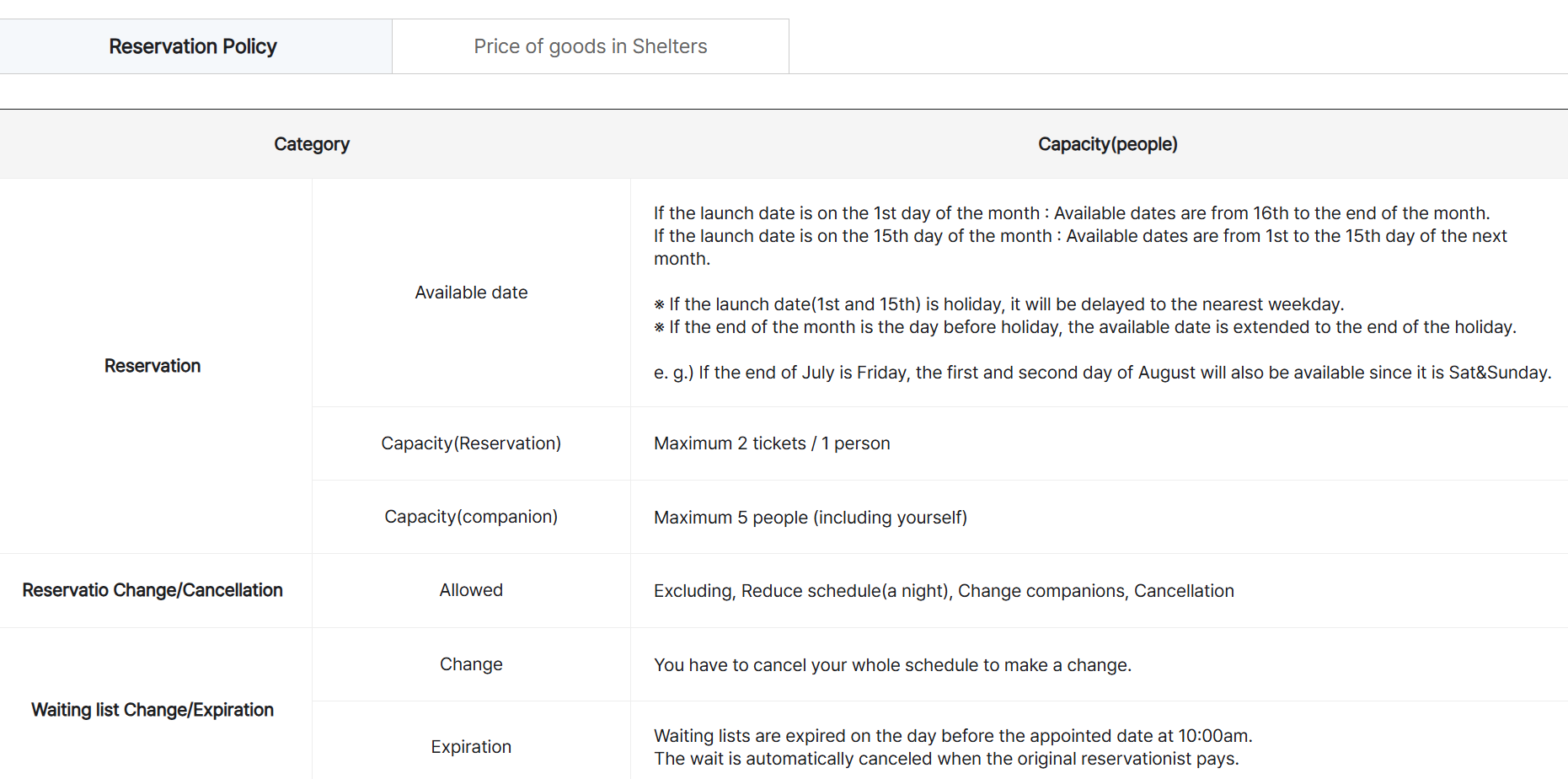
For the 2-day Seoraksan Dinosaur Ridge trek, please apply at least one month in advance. Reservations for Hoeh-un-gak Shelter open on the first day of each month and fill up quickly. Dr. K will handle the shelter reservation through the official Korea National Park reservation system.
Once a trail is confirmed, participants will receive detailed information via email, WhatsApp, or KakaoTalk, including preparation tips and meeting details.
All hikes follow basic safety principles:
- Start early to avoid crowds
- Stay on marked trails and follow posted signs
- Take regular breaks and avoid overexertion
- Move carefully on steep or rocky sections
Korean national parks are well marked in both Korean and English. We always stay on official trails and avoid unmarked shortcuts. The descent route will be discussed and decided together based on conditions and group preference.
Most day hikes take:
- 3-5 hours for easier routes
- 4-6 hours for more challenging trails
We prioritize safety and avoid rushing, always aiming to descend before sunset. If heavy rain or unsafe weather is forecast, the hike may be cancelled after discussion with participants.
Yes.
Wednesdays, Saturdays, and Sundays are regular hike days, but you may request any date. Availability will be confirmed as soon as possible.
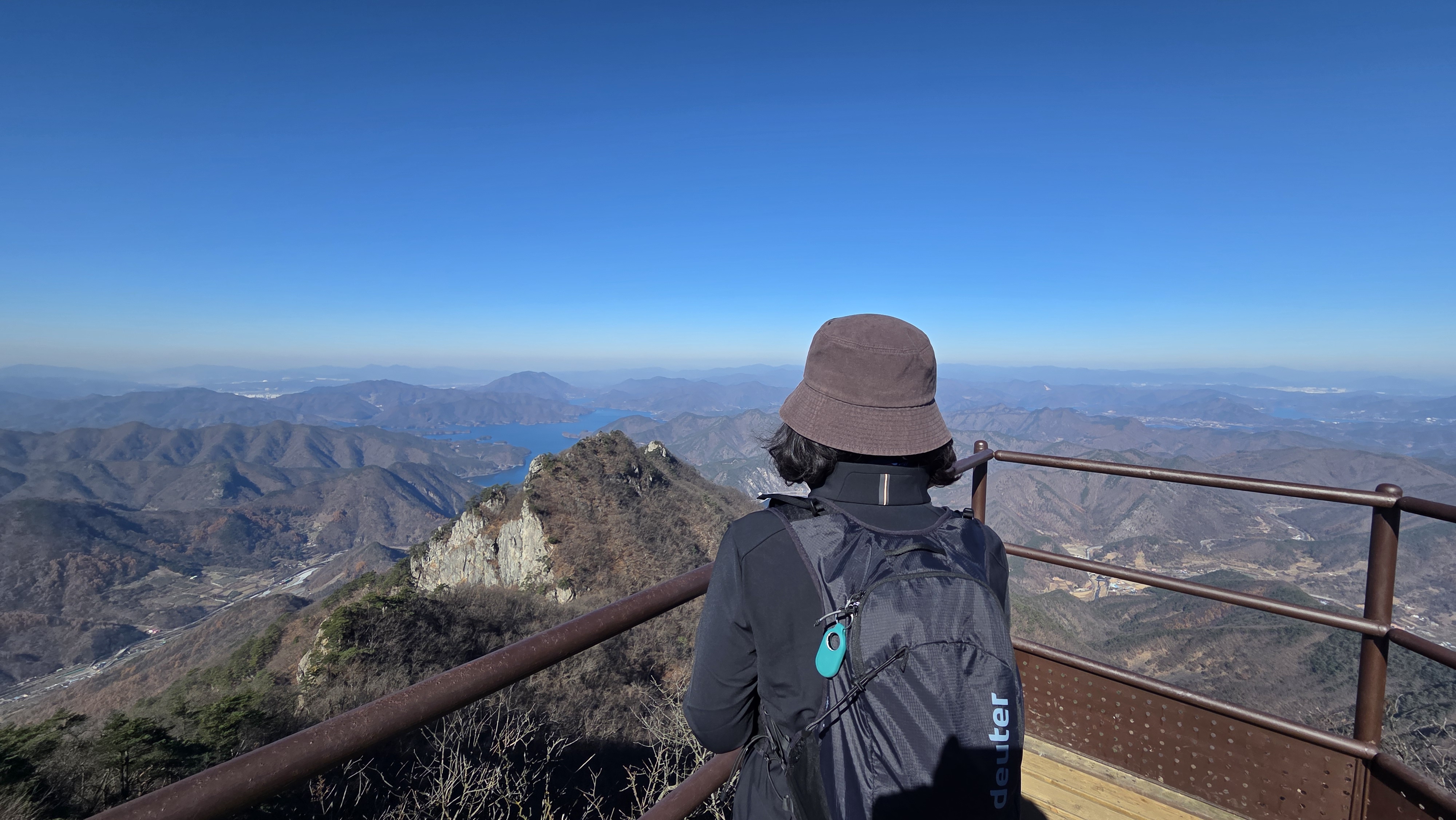
Yes.
There is no fee, and no tips are expected. Participants are only responsible for their own transportation costs (typically subway fare) and should come prepared with good energy for the hike.
After the hike, we sometimes share a meal together. Participation is optional, and costs are shared. Many hikers enjoy local food and drinks such as makgeolli (Korean rice wine) and pajeon (green onion pancake).
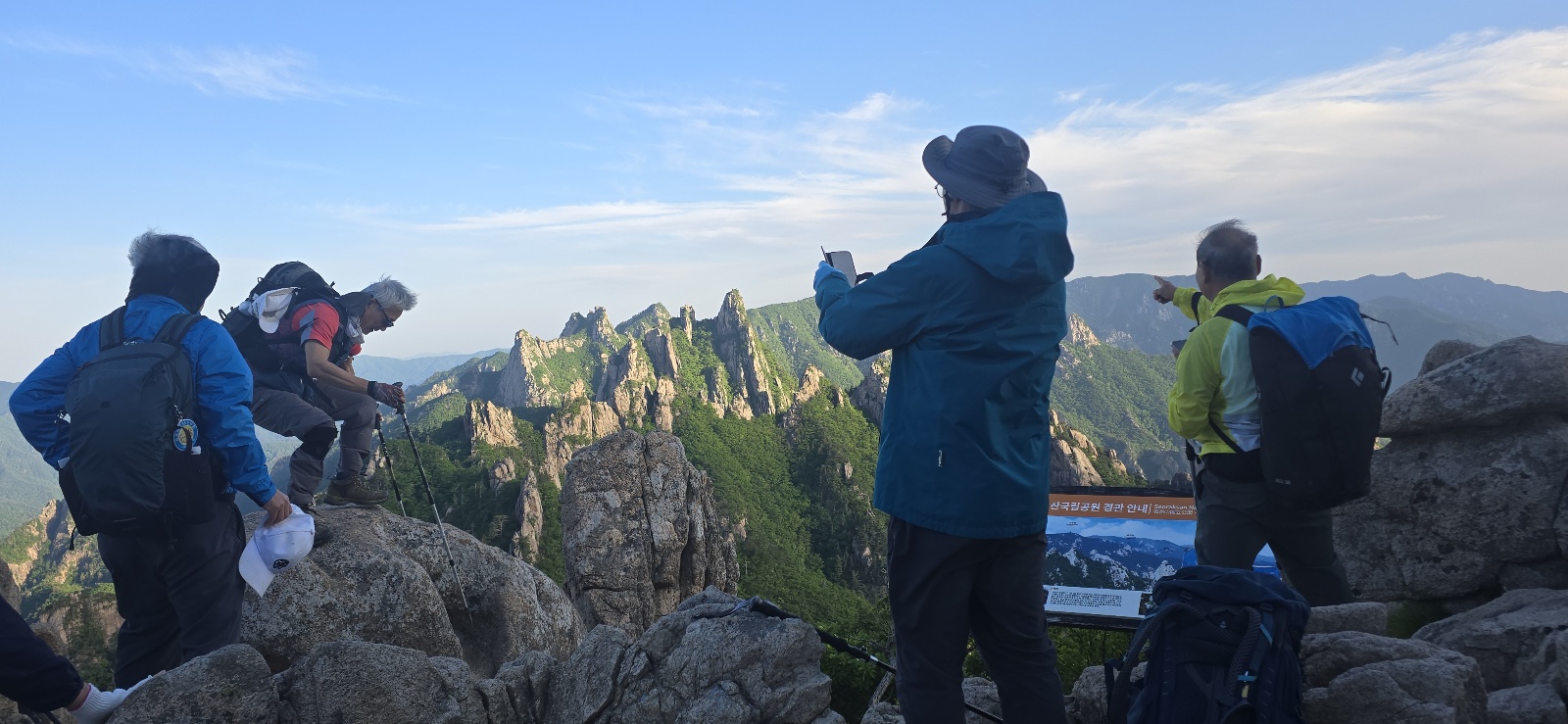
Hiking Preparation
Most trails in Bukhansan and Seoraksan do not require prior hiking experience. With the exception of more demanding routes-such as the Seoraksan Dinosaur Ridge-many trails can be enjoyed by beginners who are reasonably fit.
However, it is important not to underestimate these mountains. Despite their relatively modest height, many trails are steep, rocky, and physically demanding. Short distances do not necessarily mean an easy hike.
Most hiking accidents occur when hikers:
- Wear shoes with poor grip
- Start too late in the day
- Do not check the weather forecast
- Underestimate steep or rocky sections
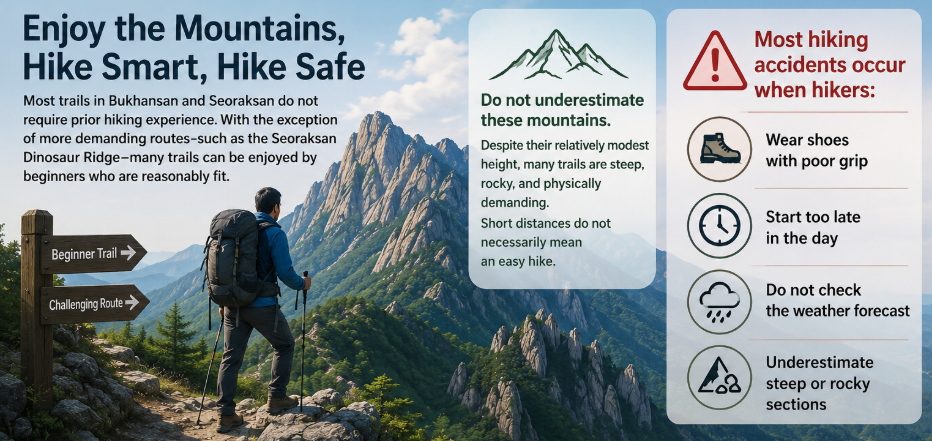
Always choose a trail based on your fitness level-not your courage. Mountains reward preparation and caution rather than bravery.
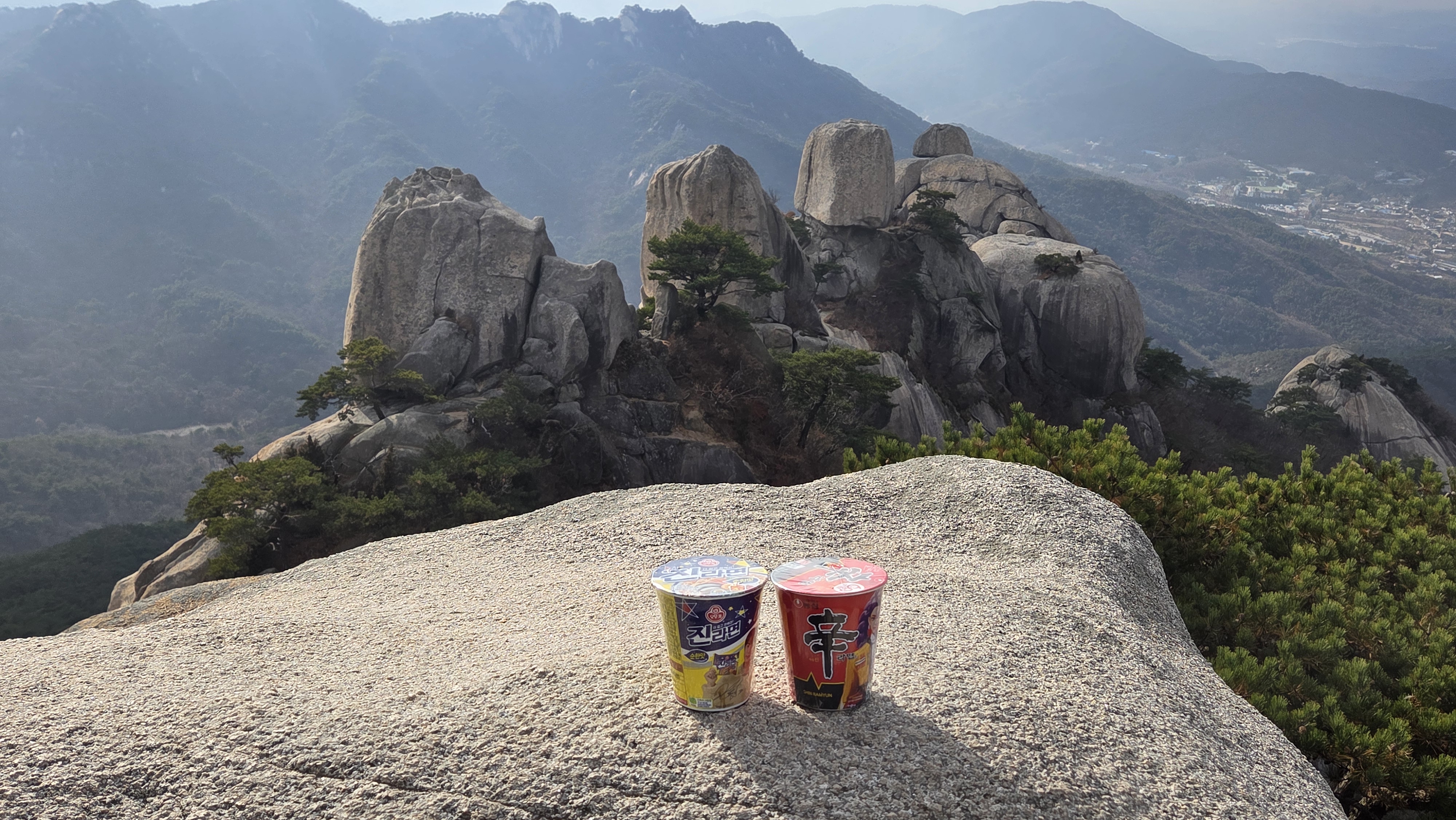
Yes! Enjoying snacks such as cup ramyeon or kimbap at the summit is one of the simple pleasures of hiking in Korea. A hot cup of ramyeon often tastes even better in the fresh mountain air, with a beautiful view.
Dr. Kim will carry about six cups of ramyeon and hot water in his backpack as a small token of appreciation for sharing the hike. At the summit, enjoy a simple taste of Korean warmth-served with a view.
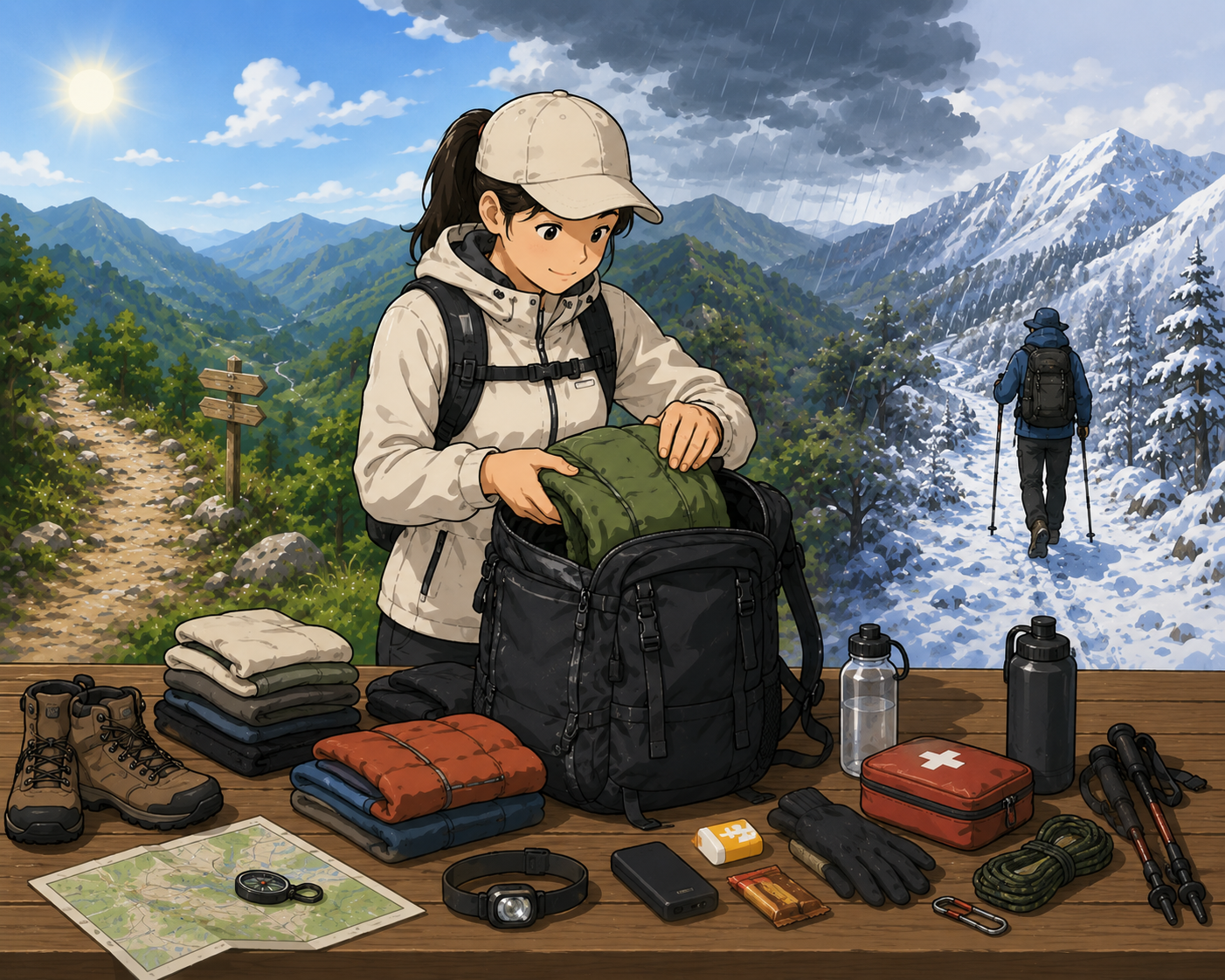
Yes. Proper hiking clothing is essential for regulating body temperature. Mountain weather in Korea can change quickly-even in summer. Temperatures often drop near peaks or in shaded areas. A lightweight windbreaker helps protect against sudden chills, post-sweat cooling, and unexpected weather changes.
Use a layering system:
- Base layer
- Insulating layer
- Outer shell (windproof or waterproof)
A simple rule is to remove a layer before you feel too warm and add one before you feel cold.
Hiking Gear Rental for Foreign Visitors: Foreign visitors can rent hiking gear near the park through Seoul Hiking Tourism (seoulhiking.or.kr, 3 locations) for a small fee of around $1-2. Available items include hiking jackets, shirts and pants, hiking boots, backpacks, gloves, trekking poles, and crampons.


Proper footwear is more important than you might expect. Running shoes may be suitable for easy trails, but hiking shoes are generally safer and more comfortable-especially on rocky terrain.
Many Korean mountains, including Bukhansan, feature granite surfaces that can become very slippery when wet. For hiking shoes, good outsole grip is essential.
For beginners, consider the following:
- Choose shoes with good traction
- Wear thick hiking socks
- Make sure your toes have enough room to move comfortably
In wet or rainy conditions:
- Move slowly and take shorter steps on rocky sections
- Avoid smooth or sloped granite surfaces whenever possible
- Use trekking poles for better balance
- Be especially cautious on descents, where slips are more common
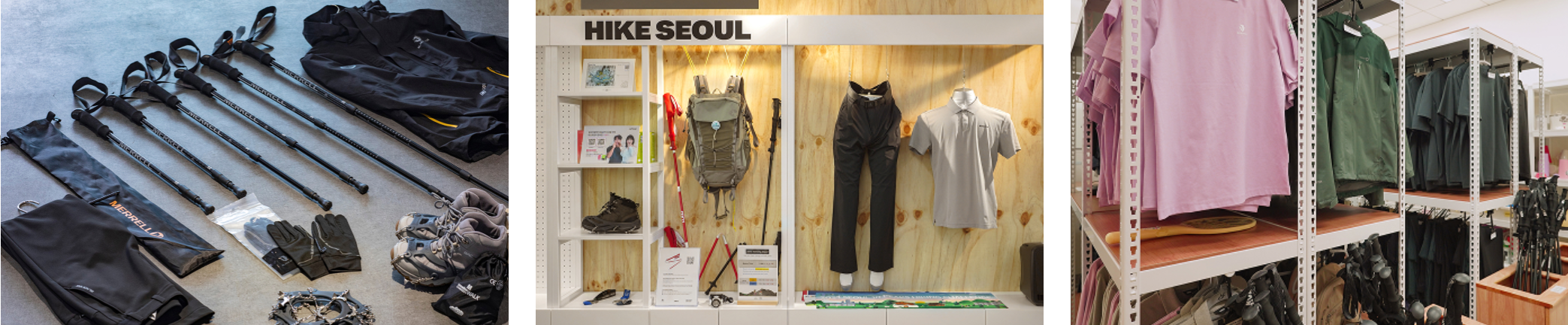
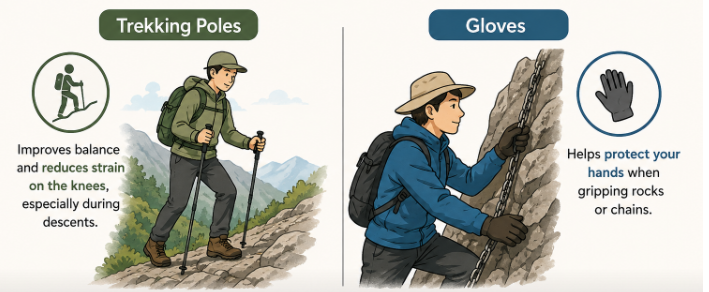
They are not required, but they can be helpful. Trekking poles improve balance and reduce strain on the knees, especially during descents. Gloves help protect your hands when gripping rocks or chains. While most trails can be completed safely without them, beginners may find them useful.
Yes. A backpack allows you to carry essential items while keeping your hands free. A 20-30 liter backpack is ideal for most day hikes.
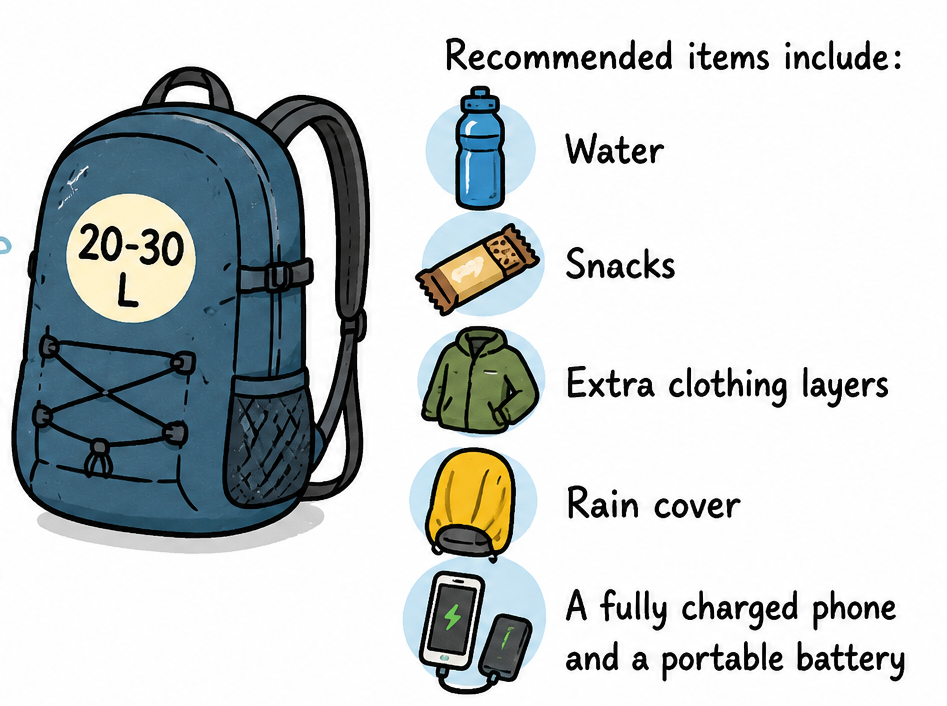
Recommended items include:
- Water
- Snacks
- Extra clothing layers
- Rain cover
- A fully charged phone and a portable battery
For longer and more challenging trails, consider bringing a compact headlamp or flashlight in case your hike takes longer than expected.
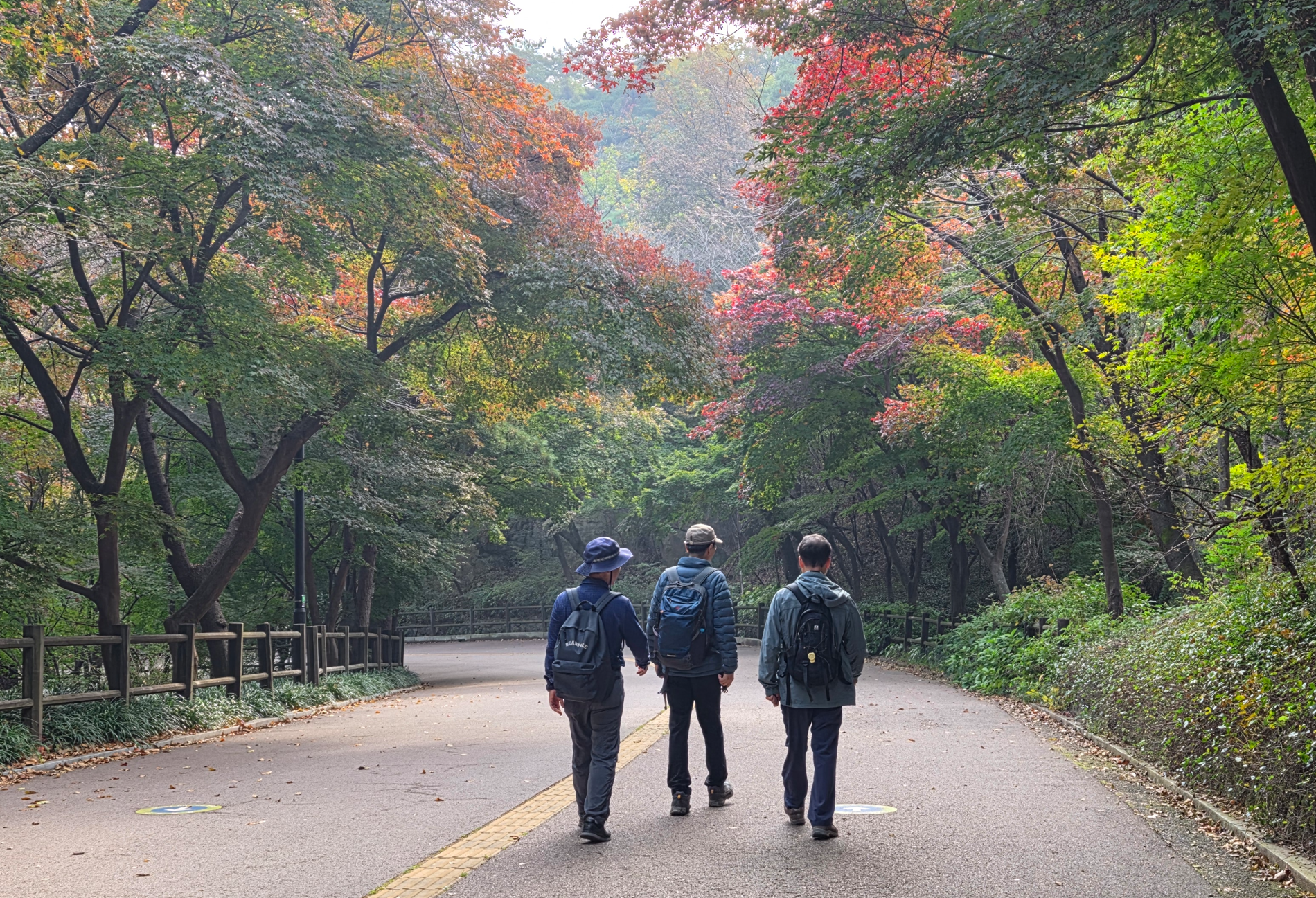
For a typical half-day hike:
- 1.5-2 liters
In summer:
- 2-3 liters
Most trails have no reliable water sources, and there are usually no shops inside national parks. Many foreign hikers make the "one-bottle mistake"-bringing only a small bottle and regretting it later in the day. When in doubt, bring more water.
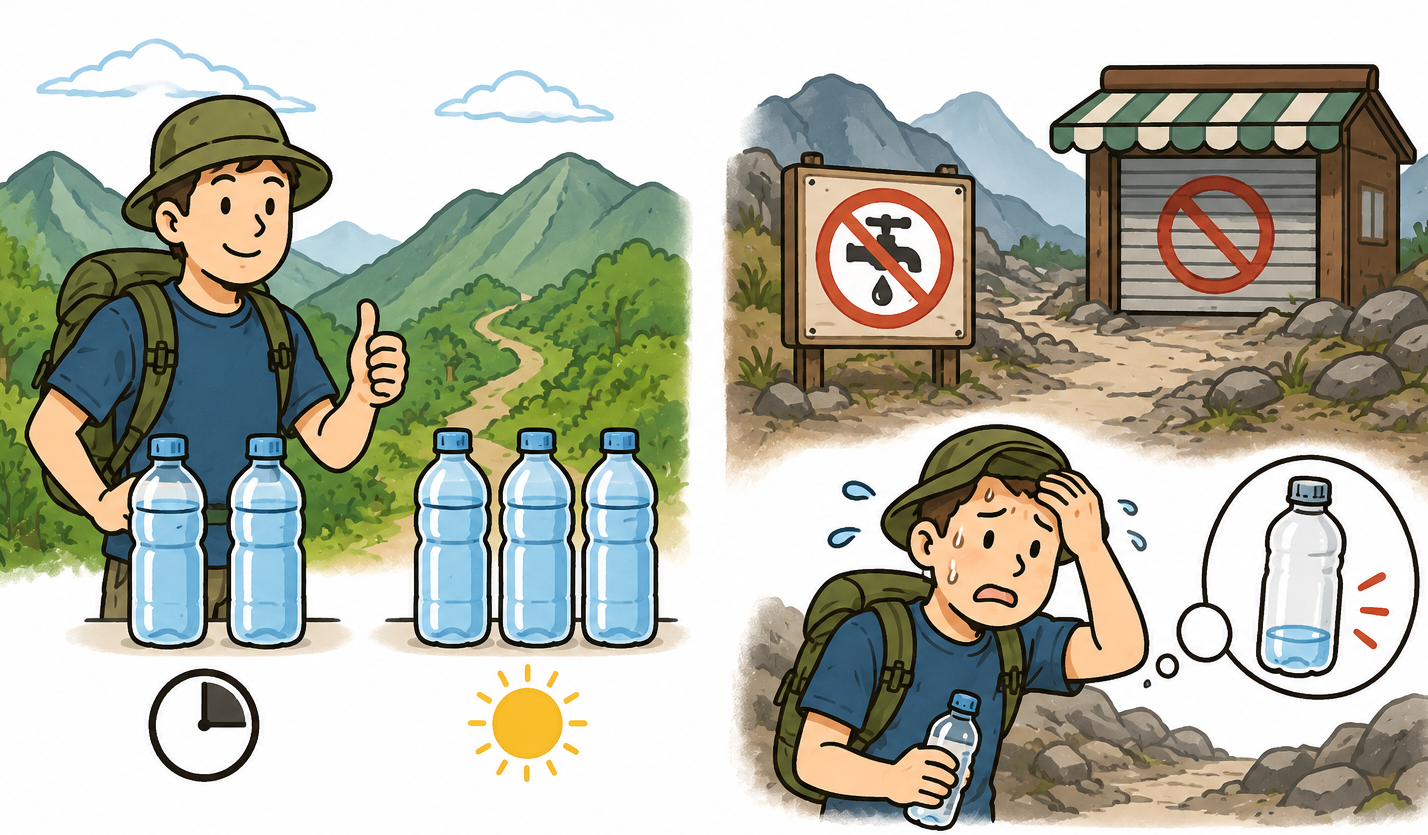
Yes-bring snacks or light meals, especially for longer hikes.
Popular Korean hiking snacks include:
- Fruit
- Nuts
- Kimbap
- Cup ramyeon
Once you start hiking, you will need to rely on what you carry with you.
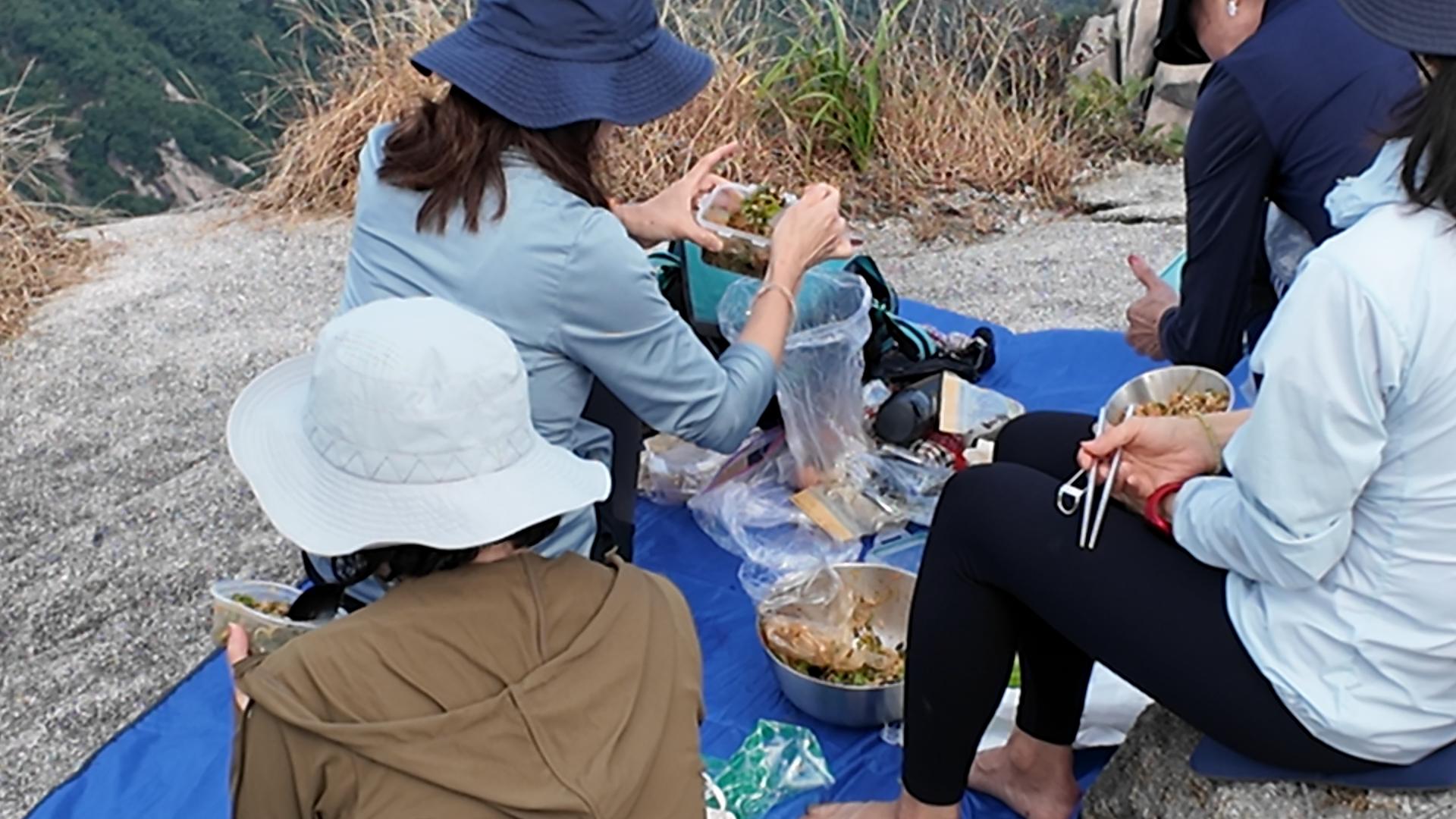
Barefoot & bibimbap at Beagundae—you deserve it!
Safety & Trail Conditions
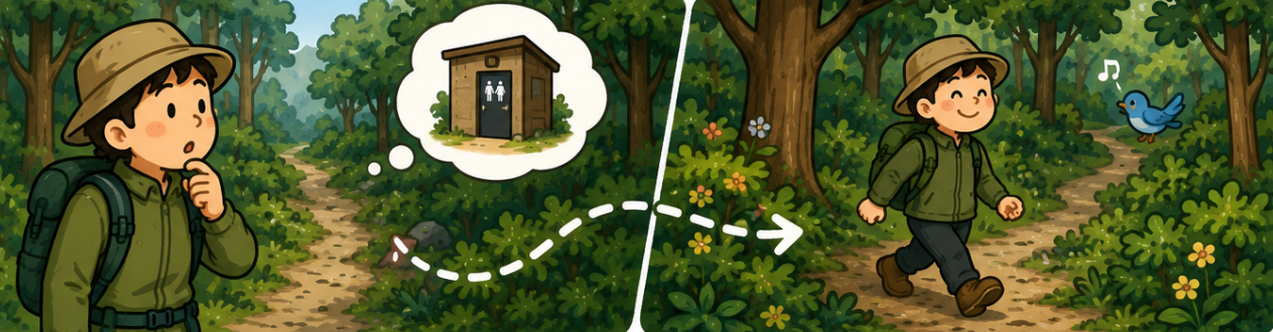
Restrooms are available at most trailheads, ranger stations, shelters, and at several points along popular routes. In more remote areas, facilities may be limited, and hikers may need to step a short distance off the trail if necessary.
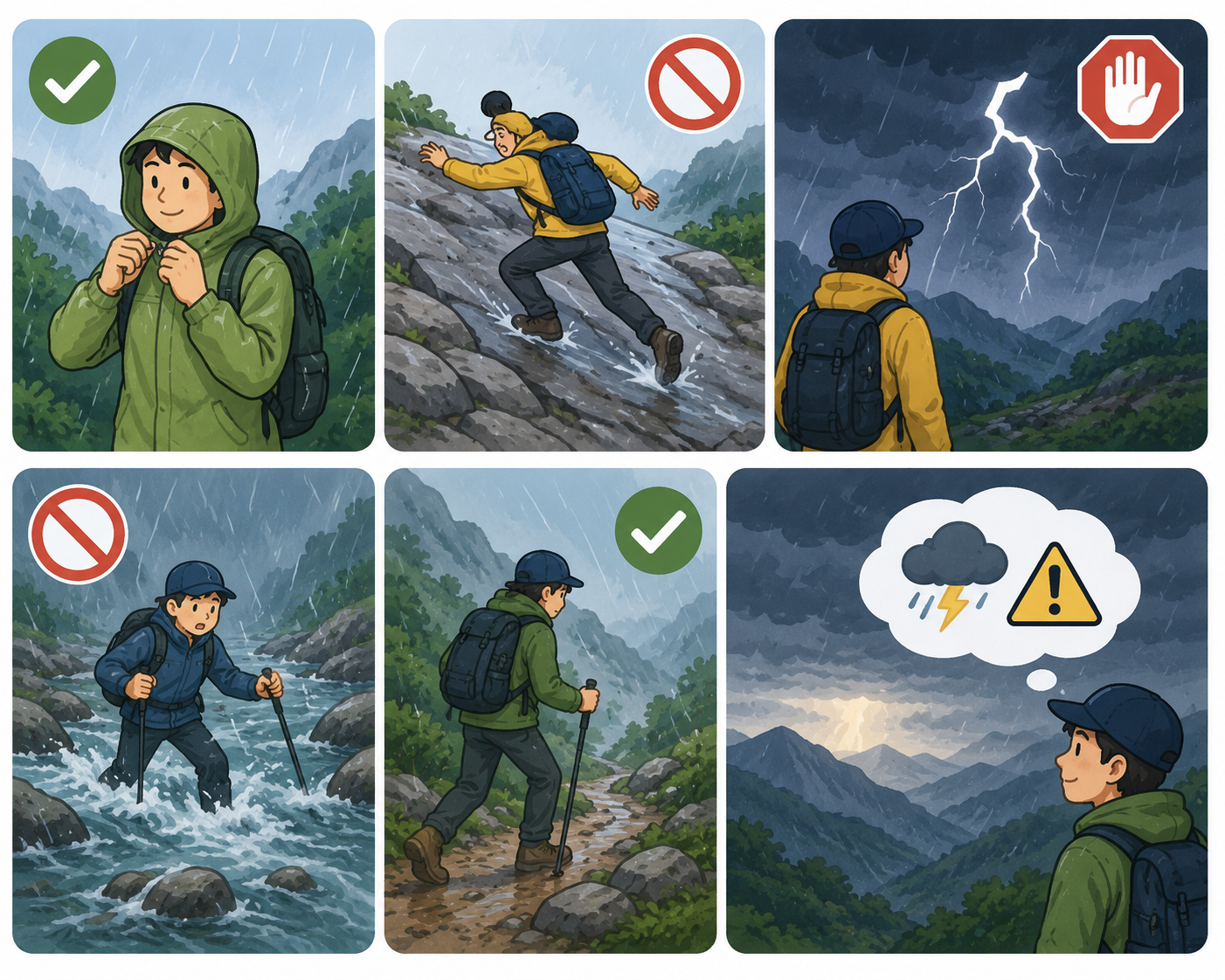
Always check the weather forecast before starting a hike. If it suddenly starts to rain while you are on the trail:
- Put on rain gear immediately
- Avoid granite slabs, as they become extremely slippery when wet
- Stop hiking if there is lightning
- Never cross streams during heavy rain
- Descend early if conditions worsen
Summer storms in Korea can develop quickly-so stay cautious, not heroic.
Usually yes.
Most Korean mountains have good mobile coverage, although the signal may be weaker in deep valleys.
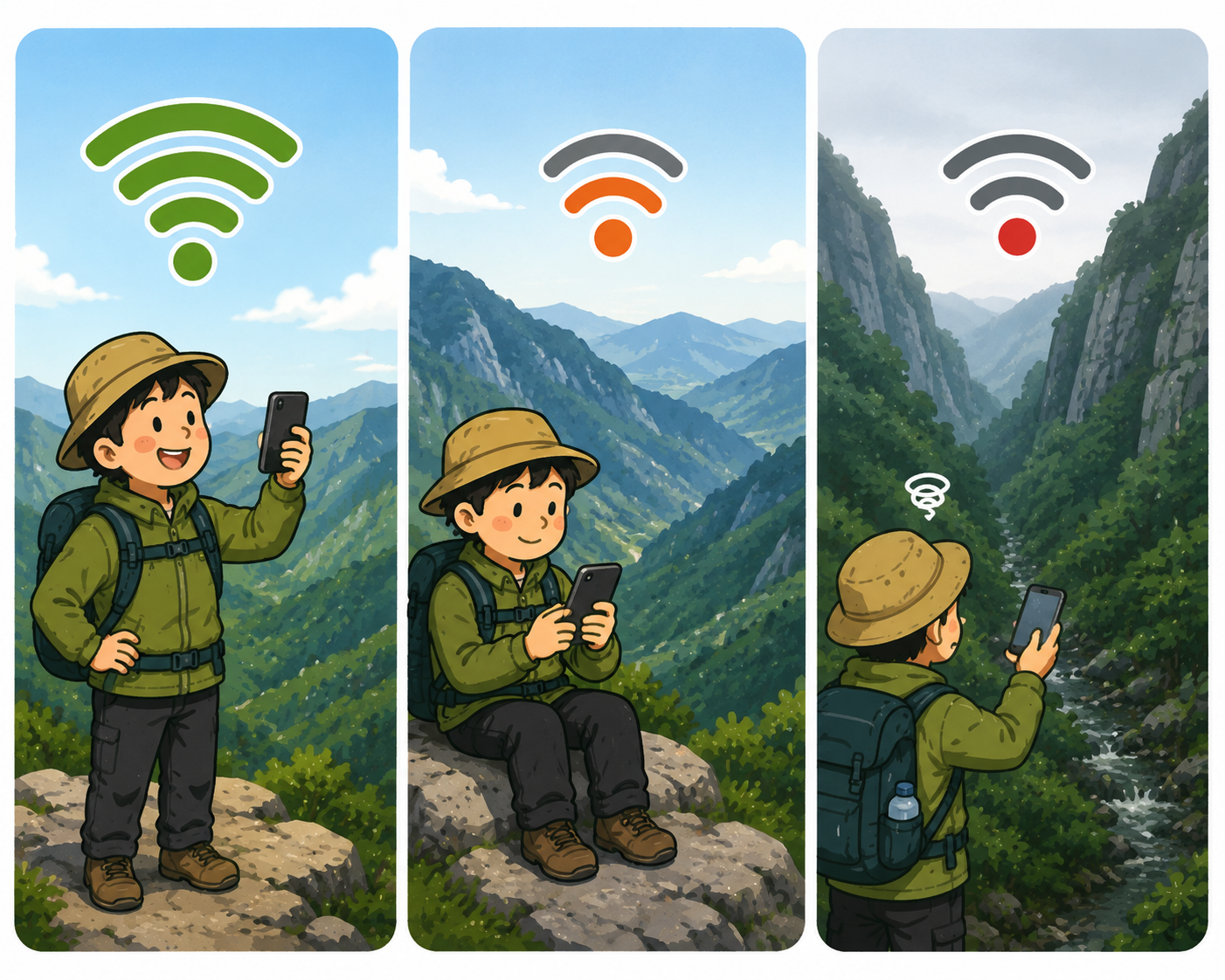
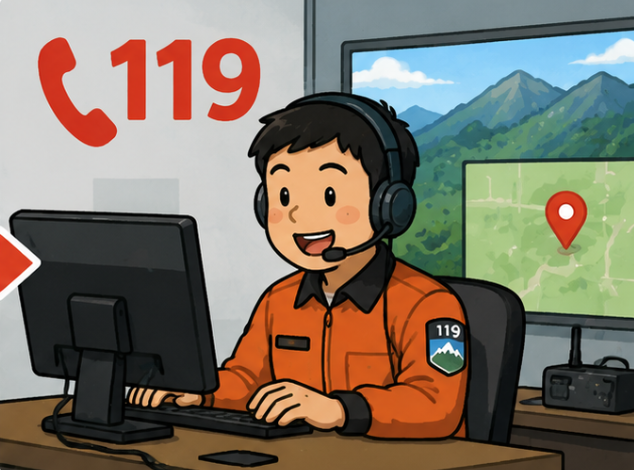
If you need assistance, dial 119 for mountain rescue services. In Korea, all mountain rescue services are provided free of charge, including helicopter rescue when necessary.
If you get lost:
• Stay calm.
• Remain near the trail whenever possible.
• Check for nearby emergency location markers. Many hiking trails in Korea are equipped with numbered location markers that can help rescuers find you quickly.
• Use GPS or map apps if available.
Remember: the safest action is usually to stay where you are and contact rescue services rather than attempting to find your own way through unfamiliar terrain.
Korean Hiking Culture
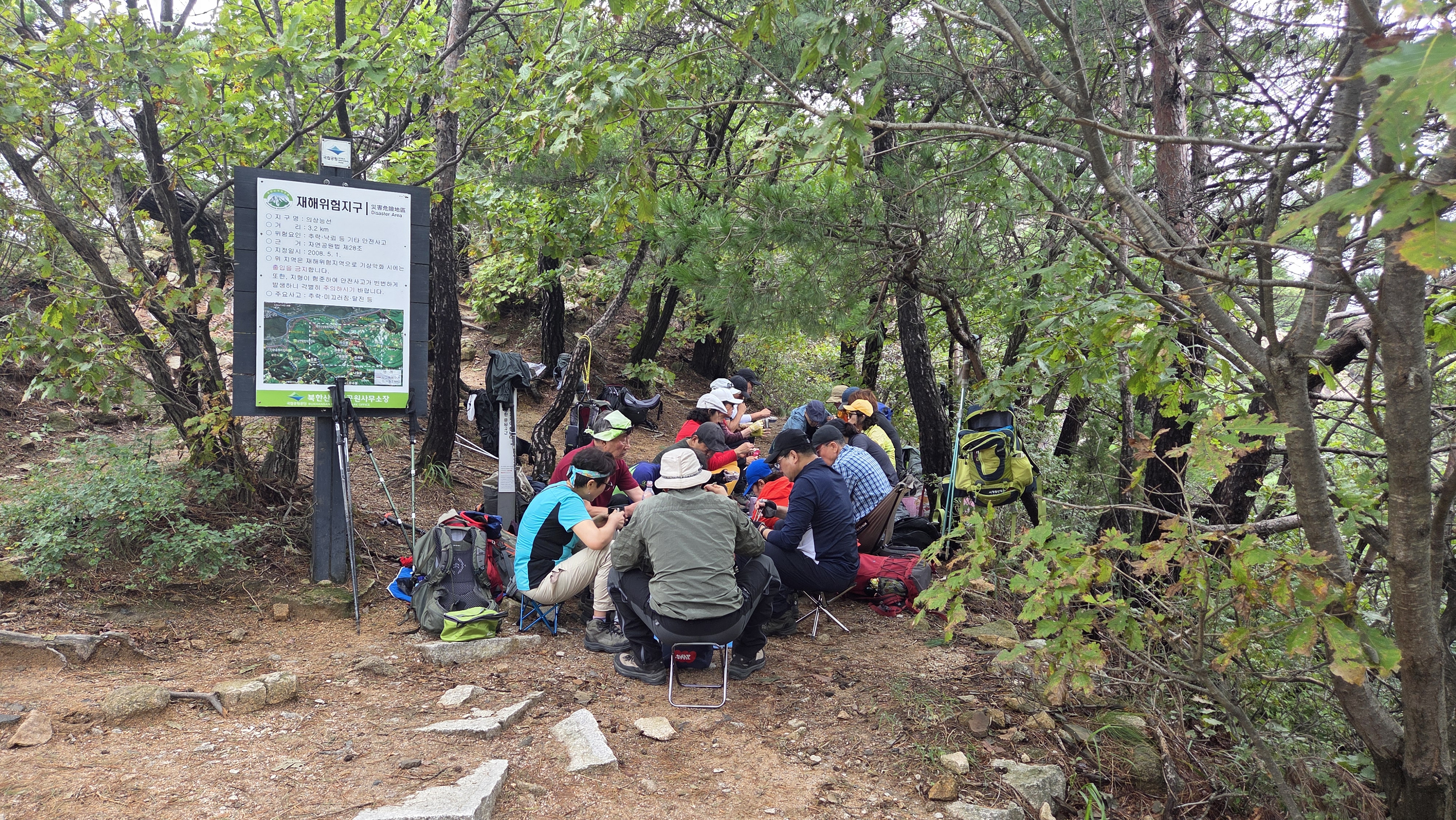
Hiking is deeply rooted in Korean culture. With mountains found throughout the country-often close to major cities-many people are introduced to hiking from an early age through school trips and outdoor activities.
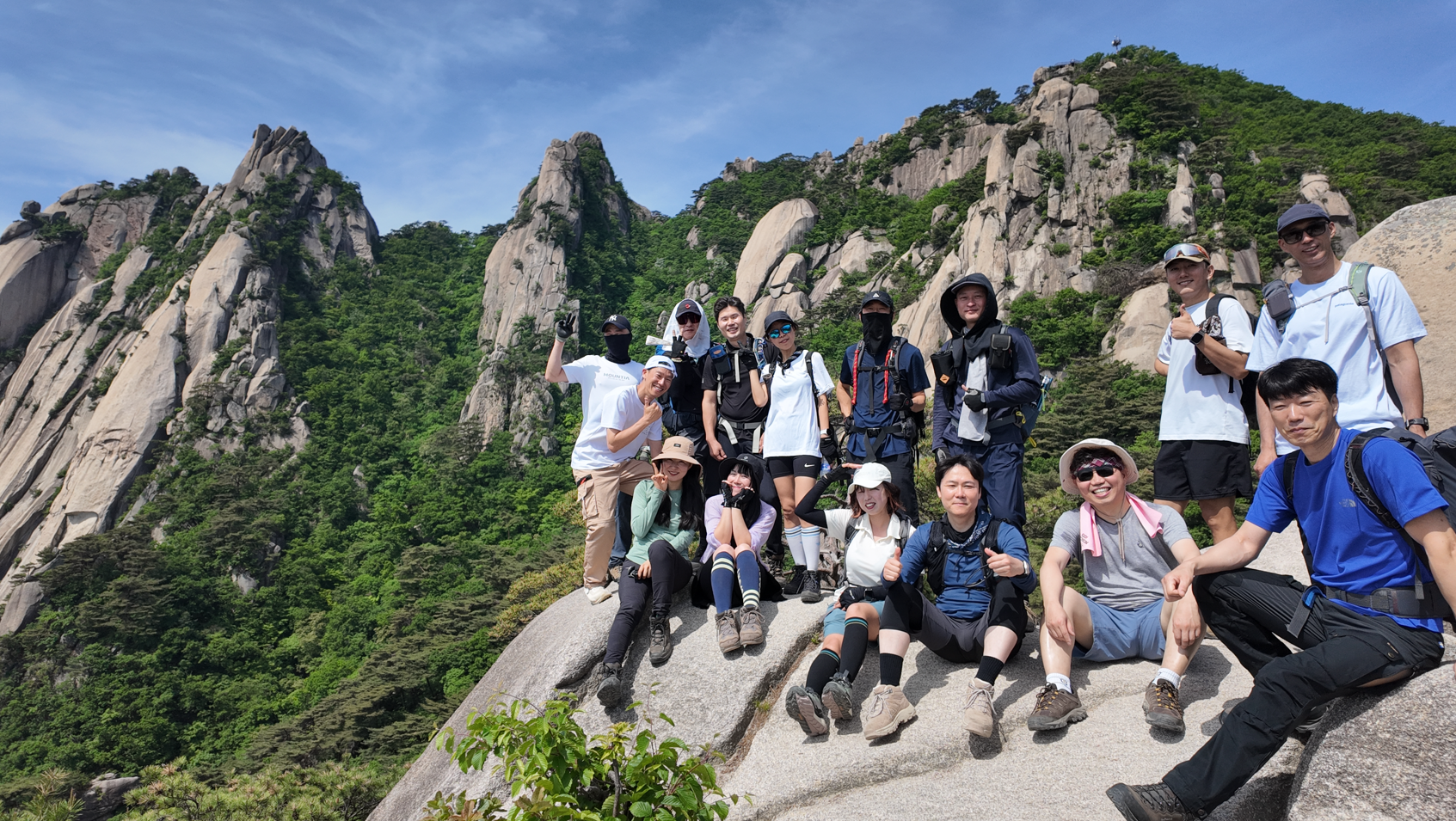
Later in life, workplaces and social groups often form hiking clubs, making hiking one of the most popular pastimes in Korea. Many people enjoy hiking in groups in order to:
- Walk together
- Take photos at the summit
- Share snacks
- Enjoy the social experience
After the hike, it is common to share local food and drinks such as makgeolli and pajeon.
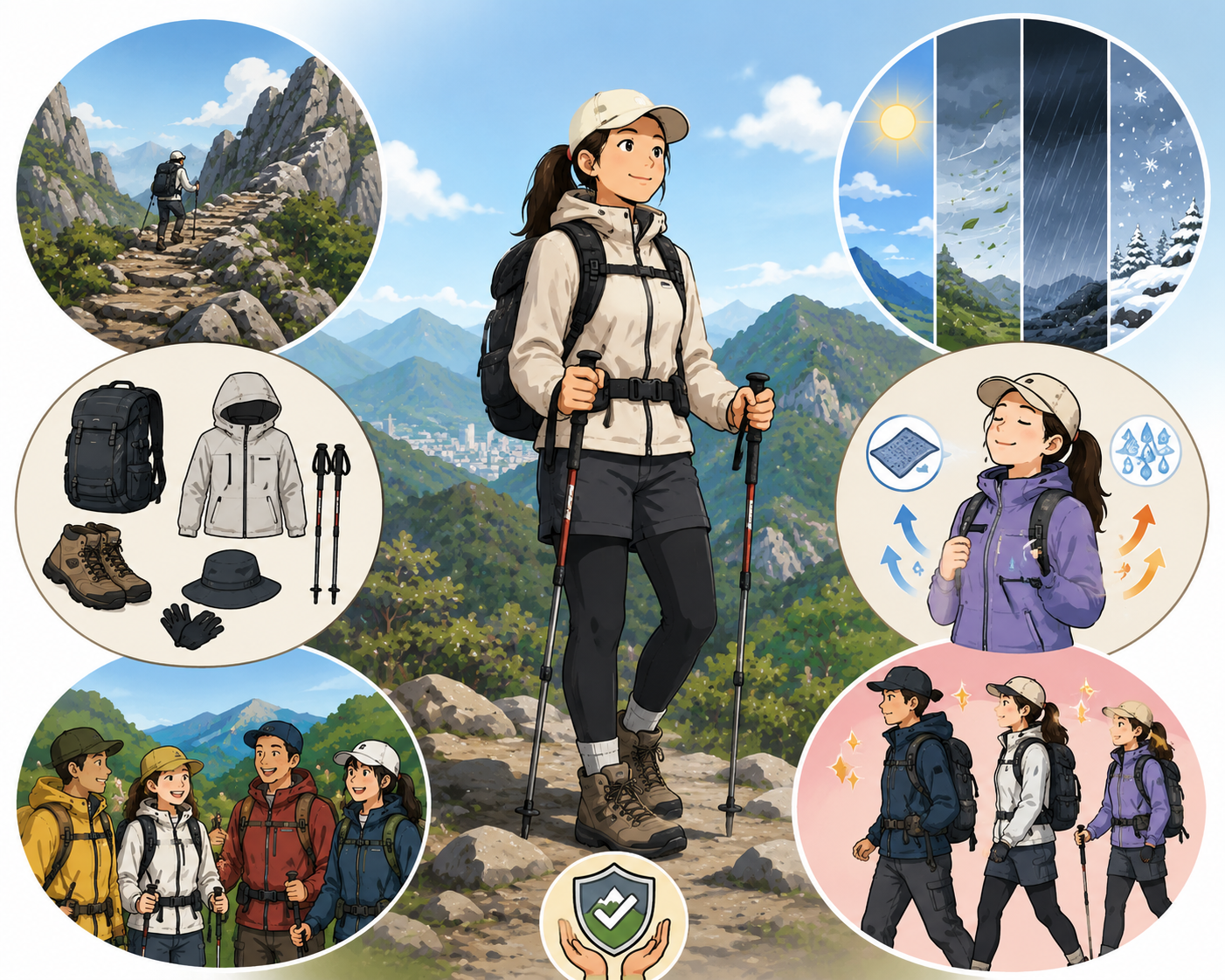
Korean mountains may not be very high by international standards, but they are often steep, rocky, and physically demanding. Weather conditions can also change quickly, especially in spring, summer, and autumn.
As a result, many Korean hikers place a strong emphasis on preparation. Proper hiking gear provides better comfort, safety, and protection from changing weather conditions. Good hiking shoes improve traction on rocky trails, while hiking clothing helps regulate temperature and manage sweat during long climbs.
Another reason is that hiking is one of Korea's most popular outdoor activities. Many people hike regularly, so investing in quality gear is both practical and worthwhile.
To foreign visitors, Korean hikers may sometimes appear over-equipped for relatively short hikes. However, most hikers would say they are simply dressing for the conditions rather than the distance.
You could say that in Korea, hiking gear is where mountain fashion meets function, comfort, and safety.
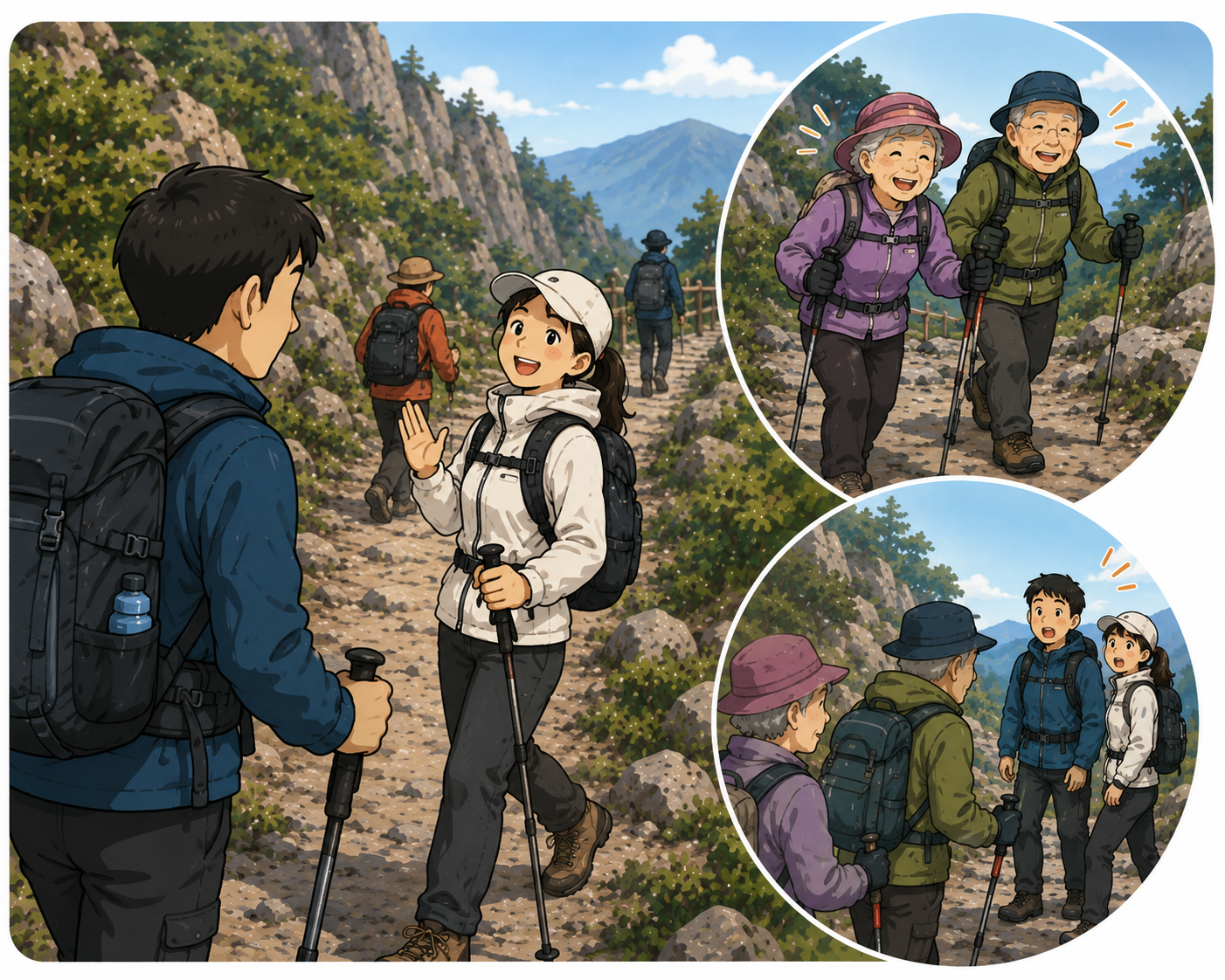
Not at all.
Simply say "Excuse me" or "Jina-gamnida." You may also notice many very fit older hikers-Korean grandmothers and grandfathers-moving confidently in full gear. It's quite common to see them passing younger hikers on steep trails!
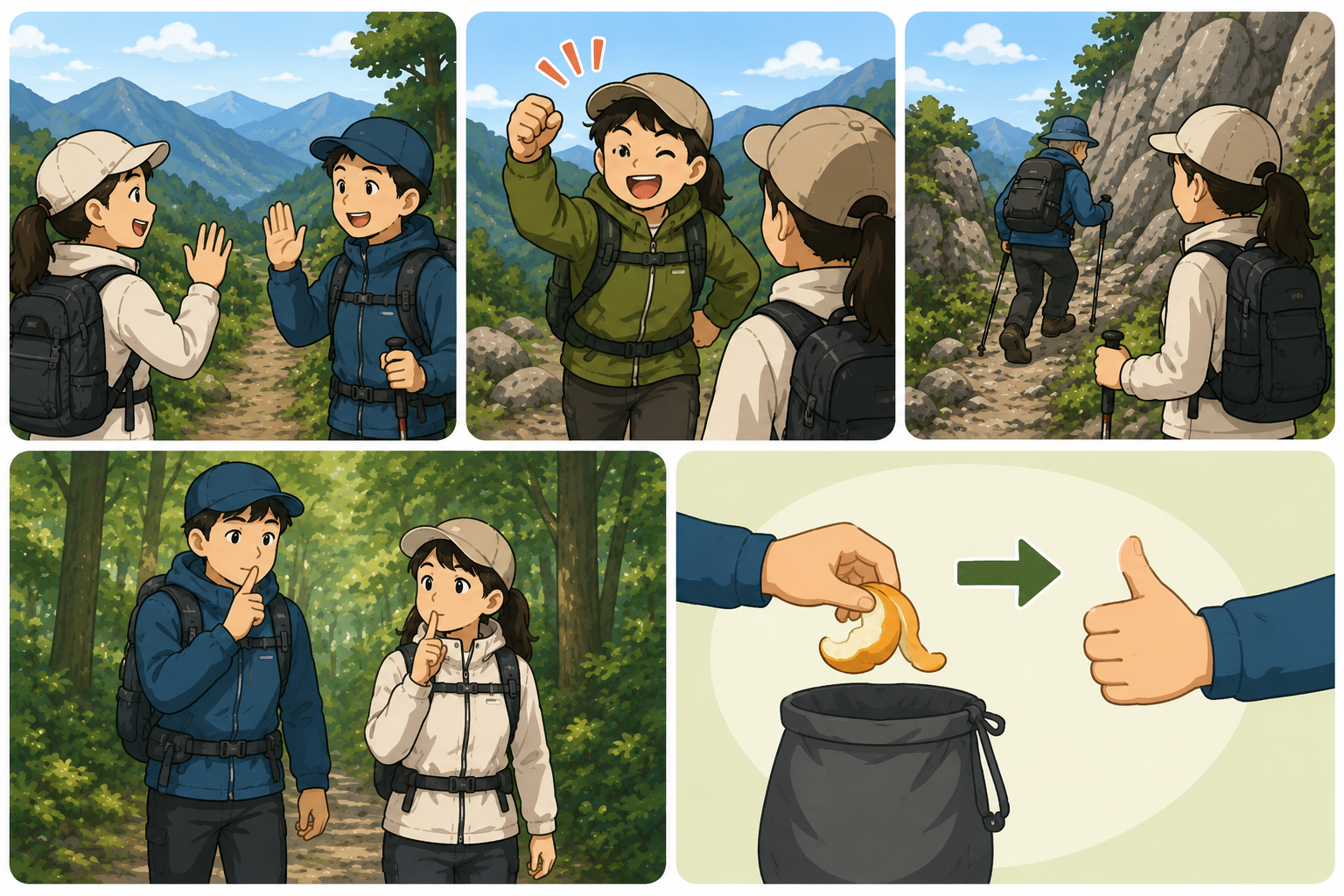
- Greet other hikers with "Annyeonghaseyo"
- You may hear words of encouragement like "Fighting!"
- Yield to hikers going uphill on narrow trails
- Keep noise levels low
- Follow the pack-in, pack-out rule-even fruit peels count as trash
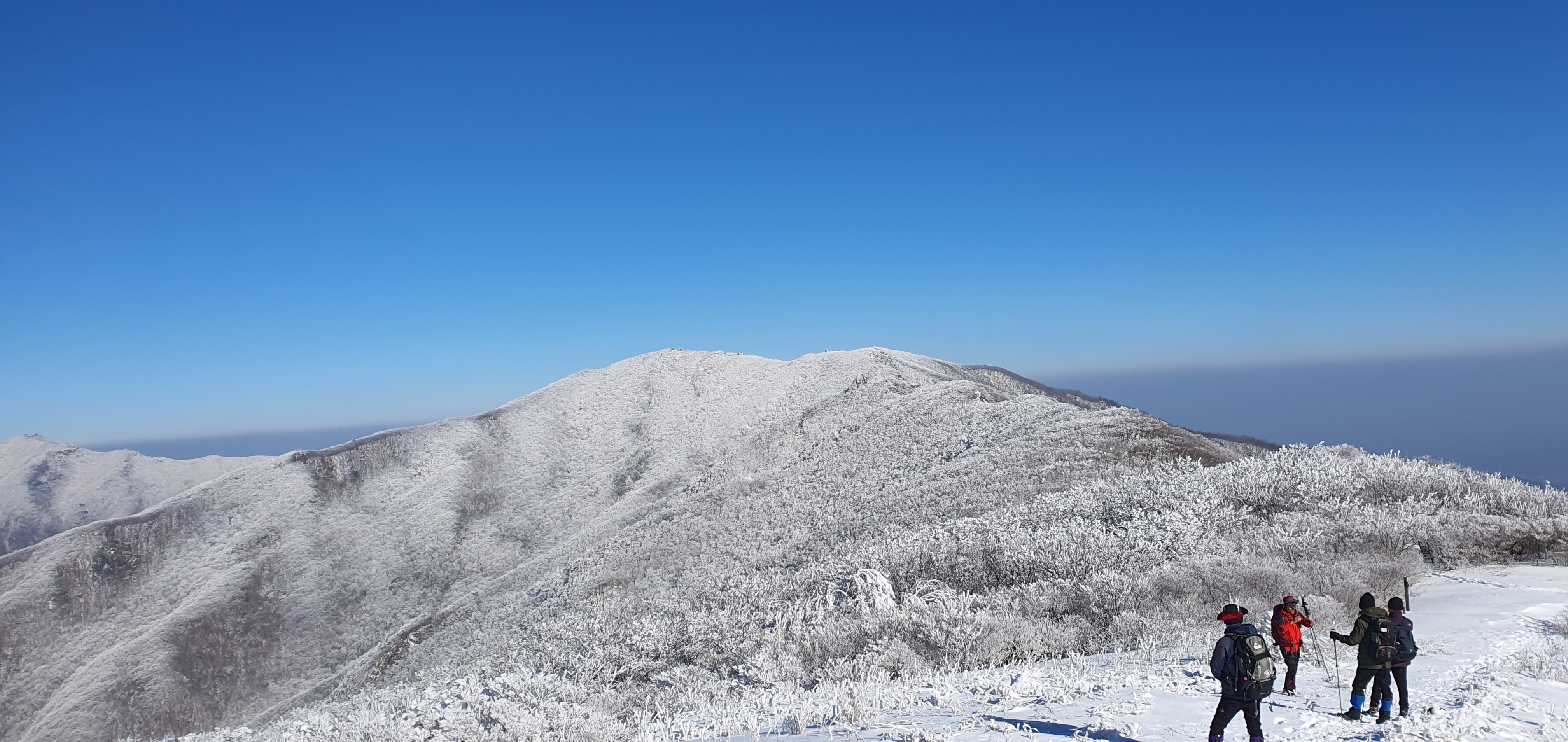
Korea Has Four Very Different Mountain Seasons
- Spring (March-May) - Melting ice can make trails slippery and rockfall more likely.
- Summer (June-August) - Watch for heat, thunderstorms, and flash floods.
- Autumn (September-November) - Beautiful foliage but quickly shortening daylight hours.
- Winter (December-February) - Focus on careful layering and managing body heat.